
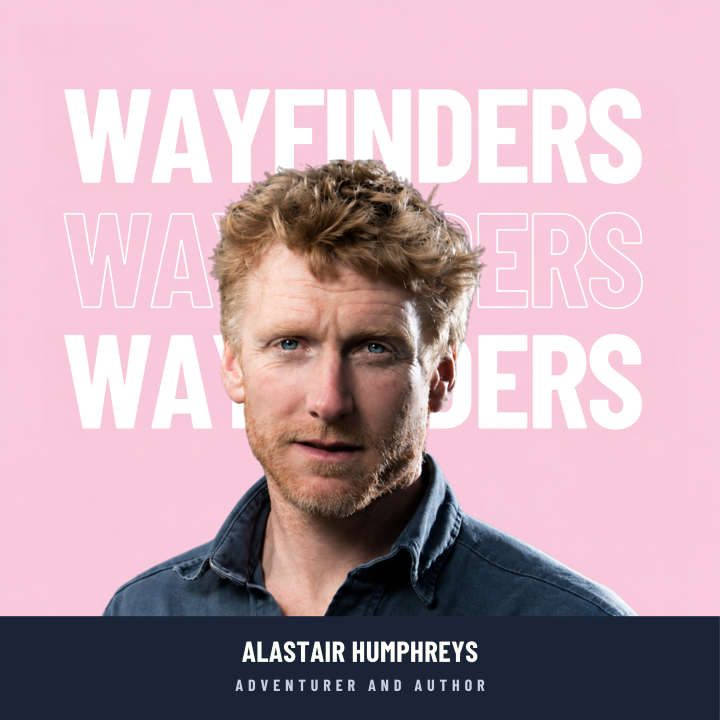
An egg sandwich, a tiny bottle of water and the Yorkshire Three Peaks. It’s not the most conventional introduction to adventure, but for Alastair Humphreys, school trips like this helped spark a lifelong love of the outdoors.
For the first instalment of Wayfinders, our new interview series celebrating the stories behind the journeys in the marine and outdoor worlds, we caught up with Alastair to hear about the experiences, challenges and decisions that have shaped his path – including turning down a teaching job to cycle around the world.
There’s some brilliant advice in there too (including a particularly good tip about adventure snacks).
Here’s Alastair’s story.
What first drew you to the outdoor world?
What first drew me to the outdoor world were the opportunities I had at school. I was very lucky to go to a school that valued outdoor pursuits but very much did not value health and safety. This meant we did some fairly crazy stuff – such as 180 kids under the age of 13 setting off to do the Yorkshire Three Peaks with an egg sandwich, a tiny bottle of water, and absolutely no supervision.
This, of course, is all great fun until something goes wrong – but thankfully nothing did. Experiences like that were very formative for me.
As a teenager, I also did some activities similar to the Duke of Edinburgh’s Award, which I loved – traipsing around the Welsh hills. For me, it was a chance to express myself and succeed at something in a way I never seemed to manage in the classroom or on the sports field. Outdoor pursuits were an egalitarian way for me to shine as a somewhat insecure, weedy, not-particularly-popular teenager.
Can you remember the moment or experience that sparked your passion for what you do?
In the first question I was tempted to talk about books, so I’ll use this one to do that. Adventure, expedition, exploration, and travel books had a huge impact on me when I was young.
When I should have been studying for my A levels, I discovered Ranulph Fiennes’ autobiography Living Dangerously and Benedict Allen’s Mad White Giant. Both struck me as extraordinary. I realised it was possible to do wilder, bolder, and more exciting things than had ever crossed my mind in my sheltered, unambitious little life. Reading expedition books opened my eyes to so much possibility.
Every journey has its ups and downs. What challenges have you faced along the way?
It’s true that if everything goes well on an adventure, that doesn’t make you a hero – it probably means the trip was a bit too easy, and maybe you weren’t on an adventure at all but on a holiday.
Every adventure needs a good dollop of discomfort – rain, cold, heat, tiredness, grumps, tantrums, self-doubt, pain, misery, wishing you were at home – all those wonderful things that make an adventure what it is.
But I’m conscious that I’ve never had to face real challenges – the sort that make it so difficult for so many people even to get out the front door. I took those things for granted when I was young, but I now realise what an incredibly privileged and fortunate life I’ve had in terms of adventures.
How has your world changed since you started, and how have you adapted?
When I began adventuring, I was very much motivated by the likes of Sir Ranulph Fiennes. For me, expeditions were a macho, elitist world of testing and proving myself – pushing to my limits.
Over time, my ethos softened, perhaps as I grew older and wiser and a little less of a chip-on-the-shoulder kid. These days, I’m far more interested in curiosity – using adventure as a way to open up the outdoors to more people and make it more inclusive than it felt in those early days.
Another major change is environmental awareness. Back then, those of us who loved wild places had no hesitation about jetting off in aeroplanes to all corners of the world – so the people who loved the wild were often the ones doing it the most damage. I’m glad that the adventure community is growing an environmental conscience, though I still fear it’s too little and our voices are far too quiet given the magnitude of the problems the planet faces, and the privileged positions we occupy.
What decision or event made the biggest difference to your success?
When I was a student training to be a teacher, the headmaster offered me a job at the school. I liked working there and I was a good teacher. If I’d accepted that flattering offer, I might still be there now – living a happy, decent life, perhaps even as headteacher.
But instead, I turned it down and said, “Thank you for the offer, but I’m going to cycle around the world.” Daring myself to take that first step – committing to getting out the front door and heading down the road less travelled – made all the difference.
If you could relive one career moment, what would it be and why?
I often think of a time on a remote ice cap in Greenland, sharing a tent with two very good friends and laughing so much that we all cried with laughter. The landscape was so beautiful and wild, and I wished I could just immerse myself in that uncomplicated wilderness more often.
What’s the best piece of advice you’ve ever received?
An excellent piece of advice I once received was that, on an adventure, you should always eat your most delicious food first. Then, as your supplies dwindle and you grow hungrier, every time you reach for a snack, you’ll be eating the tastiest thing left. It’s a positive way to look at unappetising cereal bars.
What advice would you give to someone hoping to follow a similar path?
Dream big, but start small – and start now. With whatever skills, equipment, confidence, and competence you have, just begin. Everything else will grow.
And I’d urge anyone chasing adventures to do so with purpose – to find ways to make the wild world better and leave a positive trace.
What do you wish more people understood about what you do or the world you’re part of?
I wish more people who travel the world on adventures realised what a privilege it is – and what peril the living world faces. Those of us lucky enough to do these things have a powerful responsibility to make our voices heard and to make a positive difference.
What’s your favourite place in the wild?
That’s an impossibly vast question. But I’ve realised, somewhat belatedly, that rather than wishing I were in my favourite wild place – on some distant mountain or ice cap – it’s better to enjoy the nearby nature I’m in right now.
So when I sit on a little log in a small wood near a big city, I feel happy and at peace there, rather than yearning to be somewhere else.
If you could choose one song to soundtrack your journey, what would it be?
Thunder Road by Bruce Springsteen.
So you’re scared and you’re thinking
That maybe we ain’t that young anymore
Show a little faith, there’s magic in the night…
Hey, what else can we do now?
Except roll down the window
And let the wind blow back your hair
Well, the night’s busting open
These two lanes will take us anywhere
We got one last chance to make it real
To trade in these wings on some wheels
Climb in back, heaven’s waiting down on the tracks
Oh, come take my hand
We’re riding out tonight to case the promised land
Oh, Thunder Road, oh, Thunder Road
Oh, Thunder Road
It’s a town full of losers
I’m pulling out of here to win…