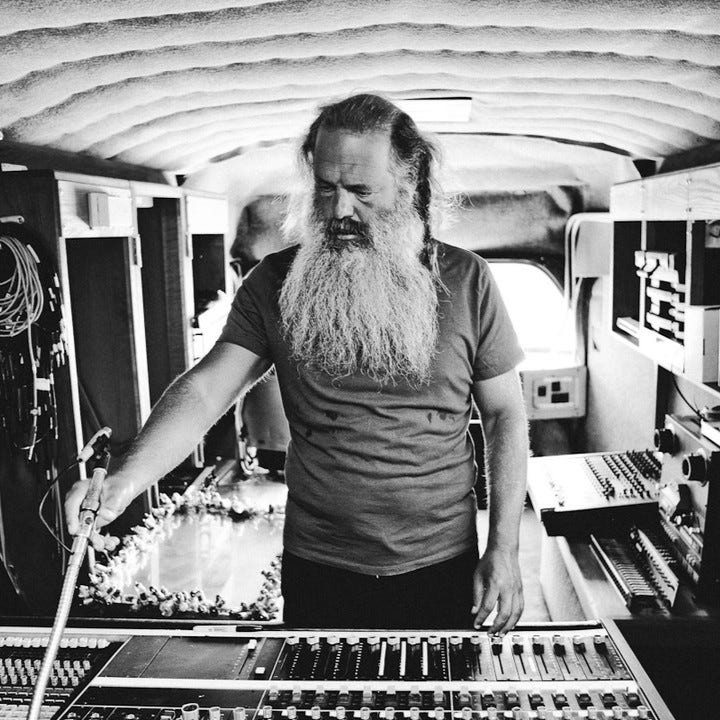
This Christmas, I was given a copy of Rick Rubin’s book The Creative Act (thank you, Secret Santa). The highly acclaimed record producer has worked with artists of every genre – Beastie Boys, Slayer, Johnny Cash, Weezer, Lady Gaga, Neil Young, Jay Z, and just about everyone in between. (The list is huge)
What connects all of them is Rubin’s ability to get every ounce of creativity from the artists in recording sessions. The Creative Act is his musings on this very process – where creativity comes from and how we can nurture it.
There was a section that particularly stood out to me:
“Flaws are human, and the attraction of art is the humanity held in it. If we were machinelike, the art wouldn’t resonate. It would be soulless.
“We’re all different and we’re all imperfect, and the imperfections are what make each of us and our work interesting. We create pieces reflective of who we are, and if insecurity is part of who we are, then our work will have a greater degree of truth in it as a result.”
I couldn’t help but think of AI.
“If we were machinelike, the art wouldn’t resonate. It would be soulless.”
Now, I’m not pretending PR is an artform in the traditional sense, but being creative is integral to everything we do.
The online and offline worlds are already flooded with middle of the road, safe content that has been churned out by one AI model or another. The content is, literally and figuratively, soulless. Because it doesn’t demonstrate creativity and the real human traits that come with it (both positive and negative), it makes it hard for any audience to develop a true emotional connection.
And that, for me, is the heart of the issue. We exist for our audiences, our clients’ audiences. If we take the creativity out of how we communicate with them, we risk overlooking or entirely missing the nuances in their behaviour – or, more crucially, they won’t see the same nuances reflected in us. There will always be a disconnect.
AI is, in its very nature, getting more advanced every day. But in parallel, we’re all becoming more attuned to the AI red flags.
Where do we go from here?
To keep me on my toes, I asked ChatGPT to give me a one-line roast of everything I’ve written above. Here’s what I got:
This article asks the most PR question imaginable: can we please have innovation, but not in a way that makes us uncomfortable or forces us to change how we work?
Yep, that stings – but also not a million miles away from the truth. The reality is, AI has and continues to change so many aspects of our work. I use it both personally and professionally, and get a lot from it. (And I’m not just saying that so I won’t be on the hit list when the robots eventually rise up). But I do find myself needing to assess my relationship with it regularly.
The question is, can AI be used to fuel and push creativity on, rather than replace it? For me, the answer is definitely yes. But of course, the challenge, then, isn’t whether to use AI. It’s how to use it without losing the very thing that makes our work resonate in the first place.
Used well, AI can boost creativity by:
Creating space for thinking
Taking care of admin, research summaries or repetitive tasks, so humans can spend more time on ideas, nuance and judgement.
Reducing fear of the blank page
Providing a starting point that can be shaped, challenged, rewritten and improved, rather than something that’s copied and pasted.
Challenging assumptions
Acting as a sounding board to stress-test ideas, explore alternative angles, or surface questions we might not have asked ourselves.
Supporting confidence, not replacing voice
Helping refine and sharpen ideas without flattening tone, personality or perspective.
Used this way, AI doesn’t dilute creativity, it creates the conditions for more of it. The responsibility still sits with us to bring judgment, curiosity and humanity to the work, and to make choices that aren’t always safe or obvious.
If you liked this one, here are a couple more blog posts that may be for you: